
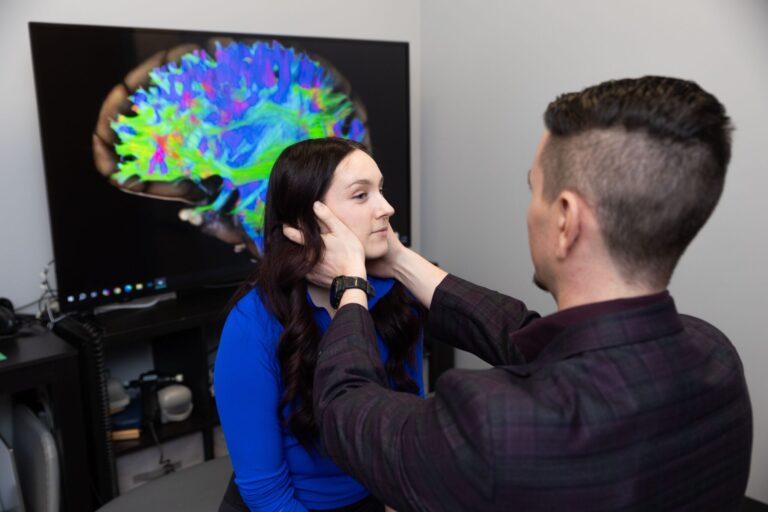
Concussion Test Online Free: Introduction
If you recently hit your head, fell, or were involved in a sports collision, you might be wondering whether you have a concussion. Many people search for a concussion test online free to quickly check their symptoms and decide what to do next.
While online concussion screening tools can help you recognize warning signs, they cannot diagnose a concussion. A proper diagnosis requires evaluation by a trained healthcare professional.
Still, a quick concussion symptom test can be a helpful first step. It can help you understand whether your symptoms might be related to a concussion and whether it’s time to seek medical care.
In this guide, you’ll find:
- A free concussion self-assessment checklist
- Guidance on how to check for a concussion
- Trusted online concussion screening resources
- Warning signs that require urgent medical attention
If you’re concerned about symptoms after a head injury, start with the checklist below.
What Is a Concussion?
A concussion is a type of mild traumatic brain injury (TBI) caused by a blow to the head or body that causes the brain to move quickly inside the skull.
This sudden movement can temporarily disrupt how the brain works.
Common causes include:
- Sports collisions
- Falls
- Car accidents
- Hitting your head on a hard surface
- Sudden whiplash-type movements
Unlike severe brain injuries, concussions often don’t show up on CT scans or MRIs. That’s why doctors rely heavily on symptoms and clinical exams to identify them.
Common concussion symptoms
Symptoms may appear immediately or hours later and can include:
Physical symptoms
Cognitive symptoms
- Feeling mentally “foggy”
- Difficulty concentrating
- Slowed thinking
- Memory problems
Emotional symptoms
- Irritability
- Anxiety
- Mood swings
Sleep symptoms
- Sleeping more than usual
- Trouble falling asleep
- Fatigue
Because symptoms vary from person to person, many people look for a free concussion test online to help determine whether their symptoms are consistent with a concussion.
Can You Take a Free Concussion Test Online?
Yes. Several organizations provide free concussion symptom tests and online concussion screening tools.
These tools typically involve:
- Symptom checklists
- Basic cognitive questions
- Balance or memory self-checks
However, it’s important to understand what these tools can and cannot do.
What online concussion tests CAN do
A free concussion test online can help you:
- Recognize common concussion symptoms
- Track symptoms after a head injury
- Decide whether you should seek medical care
- Learn about concussion warning signs
What online concussion tests CANNOT do
Online tests cannot diagnose a concussion or replace a medical exam.
A proper concussion evaluation may include:
- Neurological exam
- Cognitive testing
- Vision and balance assessment
- Medical history review
If your symptoms are concerning or worsening, you should always consult a healthcare professional.
Free Concussion Self-Assessment (Take This Quick Symptom Check)
Use the checklist below as a simple concussion symptom test. Think about how you feel right now or within the past 24 hours after a head injury.
For each symptom, mark:
- 0 = None
- 1 = Mild
- 2 = Moderate
- 3 = Severe
Physical Symptoms
Do you currently have:
- Headache
- Dizziness or feeling off balance
- Nausea or vomiting
- Blurred or double vision
- Sensitivity to light
- Sensitivity to noise
- Feeling tired or low energy
Cognitive Symptoms
Are you experiencing:
- Difficulty concentrating
- Trouble remembering things
- Feeling mentally foggy
- Slowed thinking
- Confusion about recent events
Emotional Symptoms
Since the injury, do you feel:
- Irritable
- Anxious
- Sad or emotional
- More easily frustrated
Sleep Symptoms
Have you noticed:
- Sleeping more than usual
- Sleeping less than usual
- Trouble falling asleep
- Feeling unusually drowsy during the day
After completing the checklist, add up your total score.
How to Interpret Your Results
This online concussion screening is not a diagnosis, but it can help guide your next steps.
0–5 points: Mild symptoms
You may have mild symptoms after a head bump.
Recommendations:
- Rest and avoid strenuous activity
- Limit screen time
- Monitor symptoms over the next 24–48 hours
- Avoid sports until symptom-free
If symptoms worsen, seek medical evaluation.
6–15 points: Moderate concern
Your symptoms may be consistent with a possible concussion.
You should consider:
- Scheduling a medical evaluation
- Avoiding sports, workouts, or high-risk activity
- Limiting school or work strain if symptoms worsen
A healthcare provider can perform a formal concussion evaluation.
16+ points: High concern
Your symptoms strongly suggest a possible concussion.
You should:
- Seek medical evaluation as soon as possible
- Avoid physical activity
- Avoid driving if you feel dizzy or mentally slowed
Prompt evaluation can help guide recovery and prevent further injury.
Trusted Free Concussion Testing Resources
If you’re searching for a concussion test online free, several trusted organizations provide symptom checkers and educational resources.
CDC Concussion Symptom Checklist
The CDC provides a widely used concussion symptom checklist used by coaches, athletic trainers, and healthcare providers.
It helps individuals:
- Track symptoms
- Monitor recovery
- Identify worsening symptoms
This tool is especially useful for parents and youth athletes, and can be found here.
Concussion Recognition Tools (Sports Medicine)
Many sports medicine groups provide sideline concussion screening tools used in athletics.
These tools include:
- Memory questions
- Symptom checklists
- Balance checks
While designed for trained personnel, the symptom sections can help individuals recognize potential concussion symptoms.
Concussion Education Programs
Several nonprofit concussion foundations provide free educational screening guides to help people learn:
- How to recognize concussion symptoms
- When to seek medical help
- How to support recovery
These resources are especially helpful for coaches, parents, and athletes.
When You Should See a Doctor
If you suspect a concussion, it’s often best to err on the side of caution.
You should seek medical evaluation if:
- Symptoms last longer than 24–48 hours
- Headaches worsen
- You feel increasingly confused
- Symptoms interfere with school or work
- You experienced a significant head impact
Seek immediate medical care if you notice:
- Repeated vomiting
- Severe or worsening headache
- Slurred speech
- Seizures
- Weakness or numbness
- One pupil larger than the other
- Increasing confusion or agitation
- Loss of consciousness
These symptoms could indicate a more serious brain injury and require urgent evaluation.
What Happens During a Professional Concussion Evaluation
A healthcare professional will perform a comprehensive concussion assessment.
This may include:
Medical history
Your provider will ask:
- How the injury happened
- When symptoms began
- Whether symptoms are improving or worsening
Neurological exam
The doctor may check:
- Balance and coordination
- Eye movements
- Reflexes
- Reaction time
Cognitive testing
You may complete simple tests that assess:
- Memory
- Concentration
- Processing speed
Vision and vestibular testing
Many concussion symptoms involve the visual and balance systems.
Testing may evaluate:
- Eye tracking
- Motion sensitivity
- Balance control
This information helps clinicians determine the best treatment and recovery plan.
FAQ: Concussion Tests and Online Screening
Is there a reliable concussion test online for free?
There are several free concussion symptom tests online, but they are screening tools only. They help identify symptoms but cannot diagnose a concussion.
How do I check myself for a concussion?
You can check for common symptoms such as:
- Headache
- Dizziness
- Memory problems
- Mental fog
- Sensitivity to light or noise
If multiple symptoms appear after a head injury, you should seek medical evaluation.
Can you have a concussion without losing consciousness?
Yes. Most concussions occur without loss of consciousness.
Many people experience symptoms like headache, dizziness, and brain fog without ever blacking out.
How soon do concussion symptoms appear?
Symptoms can appear:
- Immediately
- Within a few hours
- Sometimes up to 24–48 hours later
That’s why monitoring symptoms after a head injury is important.
Should I sleep after a concussion?
It is generally safe to sleep after a concussion once serious symptoms have been ruled out.
However, if someone has severe symptoms or worsening confusion, they should seek medical evaluation first.
How long does a concussion last?
Many people recover within 1–3 weeks, but some symptoms can last longer.
Persistent symptoms may require specialized concussion rehabilitation.
Key Takeaways
- A concussion test online free can help you recognize potential symptoms after a head injury.
- Online screening tools are helpful for symptom awareness, but they cannot diagnose a concussion.
- If you experience multiple symptoms such as headache, dizziness, or brain fog after a head impact, consider medical evaluation.
- Seek urgent medical care for severe or worsening symptoms.
Early evaluation and proper management can significantly improve recovery and reduce the risk of prolonged symptoms.
Medical Disclaimer
This article is for educational purposes only and does not provide medical advice. The concussion self-assessment included here is not a diagnostic test and should not replace evaluation by a qualified healthcare professional.
