
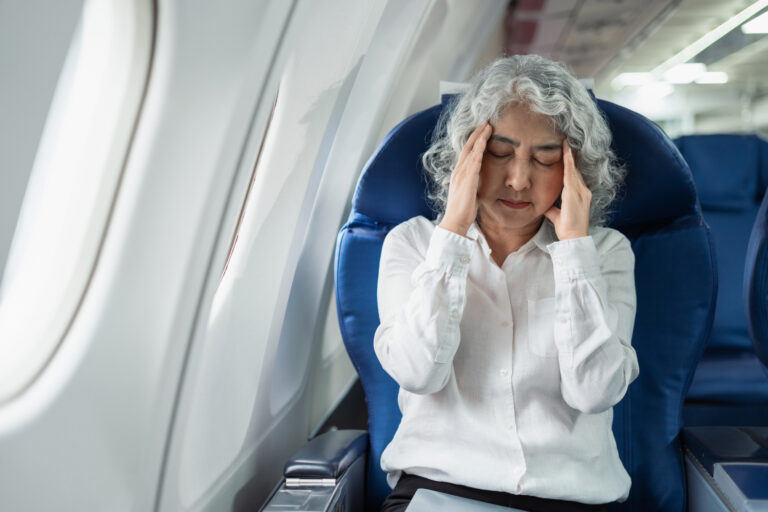
Flying After TBI: What To Expect
If you’re searching for flying after TBI, you’re probably asking a very specific question: Is it safe, and how do I avoid feeling awful mid-flight? The honest answer is that many people can fly after a traumatic brain injury—especially after a mild TBI/concussion—but the flying environment (noise, bright lights, pressure changes, fatigue, dehydration, stress) can temporarily worsen symptoms. The goal is to reduce risk, prevent symptom spirals, and know the “do not board” red flags.
This article aims to equip families, caregivers, and/or patients with the most up-to-date information regarding flying after a TBI. We hope you fid it useful and it provides peace of mind as to whether or not its safe to fly following a TBI. If you have questions about TBI recovery, click here to get in touch with a provider at The Neural Connection, the authors of this article.
Quick disclaimer: This article is educational and not a substitute for personalized medical advice. If you’ve had bleeding in the brain, seizures, recent neurosurgery, worsening neurologic symptoms, or you’re unsure about your risk, get a clinician’s clearance before flying.
Why flying can feel worse after TBI (even if you’re “cleared”)
Commercial aircraft cabins are pressurized—but not to sea level. That means your body is exposed to lower oxygen pressure than you’d experience on the ground, and you’re also dealing with sensory stimulation and prolonged sitting.
Research on air travel after concussion/mild TBI has explored whether the reduced oxygen environment could exacerbate symptoms; the evidence is still evolving, but it’s reasonable to expect that some people experience symptom flare-ups from the combination of hypobaria (lower pressure), fatigue, and overstimulation.
In simpler terms, flying usually doesn’t cause any further damage to a TBI, but it can flare up symptoms that were already there for a number of reasons.
Common flight-triggered symptoms after TBI:
- Headache or migraine flare
- Dizziness/vertigo, motion sensitivity
- Nausea
- Light/noise sensitivity
- Brain fog, irritability, anxiety spikes
- Neck pain (which can amplify headache in post-concussion patients)
When is flying after TBI usually okay?
In our clinical experience working with people with mild TBI/concussion, flying is generally considered safe once symptoms have resolved and a medical professional says it’s okay.
Some health systems provide practical waiting guidance after head injury—one example advises waiting at least 7–10 days before air travel (and considering an additional buffer after symptoms settle).
A practical, patient-centered rule of thumb
If your symptoms are still changing day-to-day, you’re at higher risk for a miserable travel day. If your symptoms are stable and predictable, you can often plan around them successfully.
“Do not fly yet.” Red flags (get medical clearance)
Delay flying and seek advice from your primary if any of the symptoms below resonate.
- Brain bleeds, skull fractures, or any outright trauma to the structure of your neck/skull
- New/worsening neurologic symptoms (weakness, slurred speech, confusion, escalating headache)
- Seizure after an injury or pre-existing seizure conditions made worse by a TBI
- Recent neurosurgery
- Persistent vomiting, fainting, or severe dizziness that prevents safe walking
- Any situation where you’d be unsafe if symptoms intensified mid-flight
If you’re a pilot seeking medical certification, the FAA has specific criteria and documentation requirements related to head/brain injuries (a different situation than being a passenger, but useful context).
Step-by-step flight plan for flying after TBI
1) Choose the “easiest possible” itinerary
- Nonstop > layovers (airports and the busy visual environment are often worse for concussion symptoms than the actual plane)
- Fly early if your symptoms get worse as the day goes on or if fatigue brings them out.
- Avoid ultra-long travel days when possible.
- Consider picking seats that reduce triggers (see below)
2) Build a symptom buffer (48 hours before)
- Prioritize restorative sleep to build up an energy reserve
- Hydrate steadily, supplementing with electrolytes if tolerated
- Minimize alcohol (it worsens sleep + dehydration)
- Keep workouts mild to moderate (no max-effort sessions right before travel)
- If you have migraine, follow your usual prevention plan
3) Pack a “TBI travel kit.”
- Noise-reducing headphones or earplugs
- Sunglasses or tinted lenses if you’re light sensitive
- Water bottle (fill after security)
- Simple snacks (stable blood sugar matters)
- Any medication your primary has prescribed you
- Neck support if neck pain triggers headache
- A printed “medical summary” if you have a complex history
4) Ask for accommodations (this is underused)
You can often request:
- Pre-boarding
- Wheelchair assistance through the airport (even if you can walk—this reduces sensory load and fatigue)
- A quieter waiting area (sometimes possible at the gate)
5) Seat strategy (small changes help)
- Aisle seat if you need to stand, stretch, or use the restroom easily
- Window seats can be helpful if visual motion is a trigger
- Sit near the front to reduce engine noise and speed up exiting
6) During the flight: helpful tips
- Hydrate consistently
- Normal snacking keeps blood sugar levels optimal
- Limit screen time if it’s a trigger
- Use a “sensory downshift” routine: eyes closed + headphones + slow breathing for 3–5 minutes each hour
- Stand and move briefly when safe
7) Landing day: plan recovery time
- If possible, avoid scheduling high-demand meetings on the same day
- Expect a “symptom tax” for 12–24 hours (sometimes longer), especially if you’re still in recovery
Special situations: flying after moderate/severe TBI
If your TBI was moderate to severe, the risk profile changes—often because of complications like seizures, blood clots, autonomic issues, or lingering neurologic deficits. There’s also research describing the physiologic effects of hypobaric exposure on brain blood flow and oxygenation (more clearly relevant in more severe injury models).
In these cases, you want a medical clearance conversation that includes:
- Seizure risk and medication timing
- Mobility and fall risk plan
- DVT prevention plan for long flights
- Any respiratory/cardiac limitations
- Cognitive fatigue management
FAQ: flying after TBI
Can flying make a TBI worse?
For most people with mild TBI, flying is more likely to temporarily worsen symptoms than to cause new damage—especially if you fly once symptoms have resolved, and you’ve been cleared.
Why do symptoms flare on planes?
TBI symptoms often flare on planes due to pressure changes, motion of the plane, visual overload, stress, and/or orthopedic challenges of sitting for a long time.
How long should I wait to fly after a concussion?
There isn’t one universal rule, but some clinical guidance recommends waiting at least 7–10 days to travel. Some add a bit of a buffer to make sure they’re stable before traveling. Some use long car rides as a test to see if prolonged movement is a trigger.
What if I have to fly but I’m still symptomatic?
Make the trip as low-load as possible (nonstop, early flight, airport wheelchair, sensory protection, hydration, and a recovery day on arrival). If symptoms are severe or worsening, don’t fly without medical guidance.
Conclusion
Final thoughts on flying after TBI
Flying after a traumatic brain injury isn’t automatically dangerous—but it also isn’t something to rush or ignore. For many people, the bigger issue isn’t the plane itself, but how a healing nervous system responds to fatigue, sensory overload, dehydration, and stress. When symptoms are stable and you plan ahead, air travel is often manageable. When symptoms are still unpredictable, the same trip can feel overwhelming.
There’s no single timeline that applies to everyone recovering from a TBI. The most reliable indicator isn’t the calendar—it’s how consistently your brain is handling day-to-day demands. Paying attention to that, rather than pushing through because you “should be fine,” often makes the difference between a tolerable travel day and one that sets you back.
Your Personalized Concussion Physical Therapy Protocol is Within Arm’s Reach
If you’re ready to move beyond feeling stuck, our providers at The Neural Connection offer a specialized concussion recovery plan based on the proven concussion physical therapy protocols outlined here.
Contact us to schedule a detailed assessment so we can build your personalized roadmap to recovery and get you back to the life you want to live, without the lingering symptoms holding you back.
Check out our 130+ 5-Star Google Reviews to see what our patients say about us!
