
Can You Drive a Week After a Concussion?
After a concussion, one of the most common questions people ask is: Can I drive again — and how soon? You’ve likely heard mixed advice, seen inconsistent recommendations online, or been told “everyone’s different.” That’s true — but there’s also solid guidance from clinicians and research that can help you decide what’s safe for you. Driving requires attention, quick reactions, visual tracking, and clear judgment — all of which can be subtly impaired long after a head injury. In this comprehensive guide, we’ll break down the science, risks, and practical steps to determine whether driving a week after a concussion is safe.
Why Driving After a Concussion Is Different from Normal Recovery
Driving is a bit harder to make recommendations for. It’s a very complex activity involving many different systems all working together. Some of these include:
- Focus and attention
- Visual tracking and depth perception
- Reaction time
- Decision‑making under pressure
- Balance and coordination
Even if your other symptoms seem to have improved after a concussion, your brain may still be recovering in ways you don’t notice right away. Studies using driving simulators have found that people can struggle with things like steering control and spotting hazards — even when they think they’re fine. That means your brain might still be a step behind, especially when it comes to the split-second decisions needed for safe driving.
Can You Drive a Week After a Concussion? Medical & Research Guidelines
There’s no single universal rule, but several patterns emerge in the clinical literature:
1. Immediate Period (0–48 Hours Too Soon)
Most concussion experts agree you should not drive at all during the first 24–48 hours after your injury — even if you feel okay. During this time:
- Symptoms may be delayed or unpredictable
- Reaction time and judgment are still healing
- Visual and vestibular (balance) systems are often impaired
Many clinical sources recommend complete avoidance of driving during this acute recovery phase.
2. Beyond 48 Hours — But Only With Criteria
After the first two days, some people may begin to consider returning to driving — but only if specific criteria are met:
- You are completely symptom‑free at rest
- You can tolerate daily cognitive activities like reading or work without symptoms
- You have gone on a short passenger ride without symptoms
- Your vision, reaction time, and attention feel normal
This approach isn’t “based on a set number of days” — it’s symptom‑based and clinician‑guided.
3. Is a Week Enough?
Here’s the direct answer to the main question:
✅ Possibly — but not guaranteed.
Many clinicians and research studies indicate that some people may be ready to resume normal driving after about a week, if they are symptom‑free and medically cleared. Some xlinicians recommended driving restrictions for up to 7 days post‑injury, but noted symptoms can persist even longer.
❌ However, one week is not a universally safe timeframe.
Because concussions and recovery vary so much between individuals, many medical experts do not give a fixed number of days and instead recommend evaluating function rather than time alone.
Symptoms That Can Make Driving Dangerous — Even After a Week
Even if you’re nearing a week out from your injury, certain symptoms strongly suggest driving is still unsafe:
Cognitive or Attention Issues
- Difficulty sustaining attention
- Trouble multitasking
- Brain fog or sluggish mental processing
Visual or Balance Problems
- Blurry or double vision
- Light sensitivity
- Dizziness when turning the head or scanning
Physical Signs
- Headache triggered by motion
- Nausea when sitting in a car
- Fatigue that worsens during the day
These symptoms can directly affect your ability to respond fast enough to real-life events that happen while driving — increasing crash risk.
Individual Risk Factors That Make Recovery Slower
Some people tend to take longer to recover and should be particularly cautious about driving:
- History of migraines or prior concussions
- Younger drivers (especially teens or young adults)
- Older adults with slower cognitive processing
- People with prolonged or persistent symptoms
- Those with vestibular (balance) or visual impairments
These factors can mean your brain may still be healing at 7 days, even if most symptoms have improved.
What Doctors Actually Do to Assess Readiness
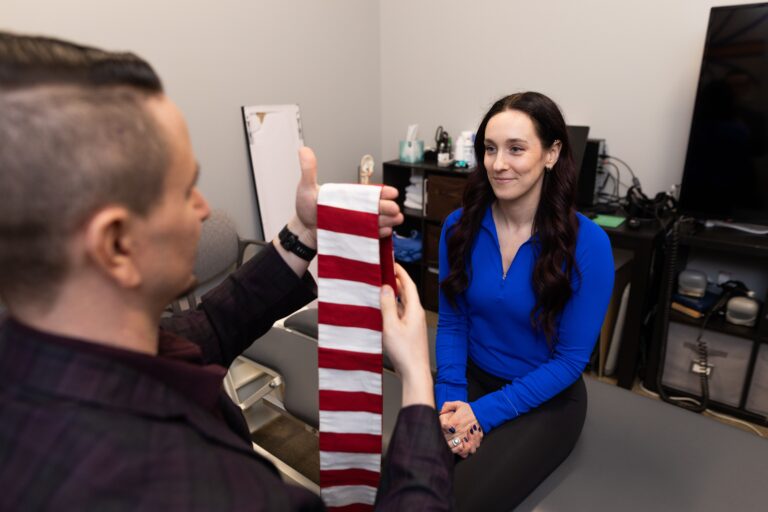
Rather than a hard-set number of days, many providers will often opt for a more data-driven approach to make sure the return to driving is as seamless as possible. Some assessments include:
Functional Assessments
- Cognitive tests (attention, memory, processing tasks)
- Balance and vestibular assessments
- Vision and eye‑tracking evaluation
Can I Drive a Week After a Concussion? Real‑World Testing
Some specialists recommend a short, supervised driving check — for example:
- A daytime route with few obstacles
- A familiar neighborhood with no highway driving
- Clear weather and no distractions
This helps make sure your actual performance matches how you feel. It’s a more objective measure than time alone.
Teen and New Driver Considerations
Guidelines for teenagers are stricter due to a number of factors. The reasoning behind this is:
- Teens may often return to driving before they’re safe
- Teen brains are still developing and are more prone to impairment
- Teens may overestimate their abilities post‑injury
Healthcare providers often recommend a more gradual return with shorter, daytime drives and supervision before allowing full solo driving.
The Legal and Safety Risks of Driving Too Soon
Choosing to drive before you’re ready doesn’t just risk your health — it can have legal consequences:
- You could be held liable if impaired driving contributes to a crash
- Insurance may not cover damages if you were medically impaired
- Laws vary by state, but some require reporting certain neurologic conditions
Remember: driving is a privilege and a responsibility — and being medically fit to drive is part of that responsibility.
Can You Drive a Week After a Concussion? Timelines
Here’s a practical roadmap to safely resume driving after a concussion:
Step 1 — Immediate Rest (Days 0–2)
Hard reset. Let your brain relax and recover for this initial recovery window. This is the only time rest and dark are a good idea.
Step 2 — Symptom Monitoring (Days 3–7)
Track:
- Headache severity
- Light, sound, motion sensitivity
- Reaction time or fogginess
If symptoms persist, do not attempt to drive.
Step 3 — Functional Testing
Your primary or concussion specialist may use tests to gauge progress, which may include:
- Cognitive tests
- Balance and visual exams
- Reaction time checks
Step 4 — Short, Supervised Driving Trial
If cleared:
- Drive short, familiar routes
- Only in daylight
- No high‑traffic or complex environments
Step 5 — Gradual Expansion
As tolerance improves:
- Increase the length of trips
- Try new routes involving more traffic
- Return to the typical commute
Practical Tips for the Road Back
Here are strategies that can help the transition:
- Avoid Night Driving Initially — glare and light can exacerbate symptoms.
- Limit Distractions — no loud music, phone use, or heavy conversation.
- Stay Well‑Rested — fatigue can worsen symptoms.
- Check Medications — some OTC meds affect alertness and reaction time.
When to See a Specialist Before Driving
You should talk to a healthcare provider before driving if any of the following are true:
- You still have symptoms at rest
- You experience symptom worsening with activity
- You have visual, balance, or coordination issues
- You’ve had multiple concussions in the past
Your provider can guide you on personalized testing and clearance.
Key Takeaways
- Driving within the first 48 hours is unsafe.
- A week may be enough for some, but not all. A mix of subjective readiness and objective data should drive the decision to return to normal driving.
- Continued symptoms are a red flag. Visual, cognitive, or vestibular symptoms increase crash risk.
- Medical clearance and a gradual return to driving are ideal.
Conclusion
So, is it safe to drive a week after a concussion? The truth is — it depends. For some people, seven days might be enough, but only if their brain has had time to fully recover. That means clear thinking, quick reflexes, stable vision, and sound judgment need to be fully back. There’s no set timeline that works for everyone. Most healthcare providers recommend focusing on how well you’re functioning — not just counting days. In the end, the safest choice is to wait until you’re truly ready, both for your own well-being and for the safety of others on the road.
Your Personalized Concussion Physical Therapy Protocol is Within Arm’s Reach
If you’re ready to move beyond feeling stuck, our providers at The Neural Connection offer a specialized concussion recovery plan based on the proven concussion physical therapy protocols outlined here.
Contact us to schedule a detailed assessment so we can build your personalized roadmap to recovery and get you back to the life you want to live, without the lingering symptoms holding you back.
Check out our 130+ 5-Star Google Reviews ⭐️⭐️⭐️⭐️⭐️ to see what our patients say about us!
